
Aggregators and producer groups
Record the stock you collect and every movement out, in the item's own unit, and find buyers for what you hold.
Manage your businessEthiopia's food system loses $9.6 billion every year. Not to drought. To a broken chain.
Estimates from FAO and Ethiopia Ministry of Agriculture publications; see the sourced loss ranges on the post-harvest loss page.
Ruit is supply chain infrastructure for fresh produce: one shared record from field to plate.
Produce moved through platform
Fresh produce catalog · live from platform operations
Shown here once the first fresh produce entries are confirmed on Ruit.
Fresh produce saved vs. FAO baseline
FAO post-harvest loss baseline vs. live operations
Shown here once the first fresh produce entries are confirmed on Ruit.
Partners & Institutions
Ruit is embedded in Ethiopia's national food and technology systems, not operating in isolation.


Partnership details available on request for institutional evaluation.
Planted in Tigray. Worth 100 birr to someone in Addis.
You will pass through four pairs of hands to get there.
Most of you won't make it.
Farm
Middleman
Middleman
Wholesale
Retail
Plate?
40%
never reaches a plate
15%
is all the farmer sees
4-6x
middlemen in between
Scroll to follow the chain
Asnakech
Smallholder Farmer, Tigray

No price to reference. No alternative buyer. She sells immediately because she has no choice.
15%
of the final market price reaches Asnakech. The middleman keeps the rest. (FAO)
The Chain
Middleman Layers 1 and 2
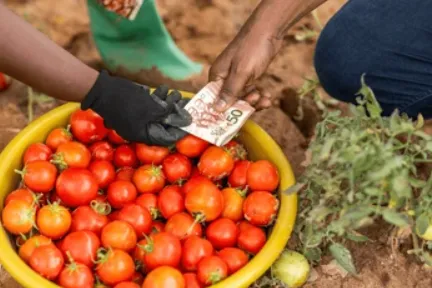
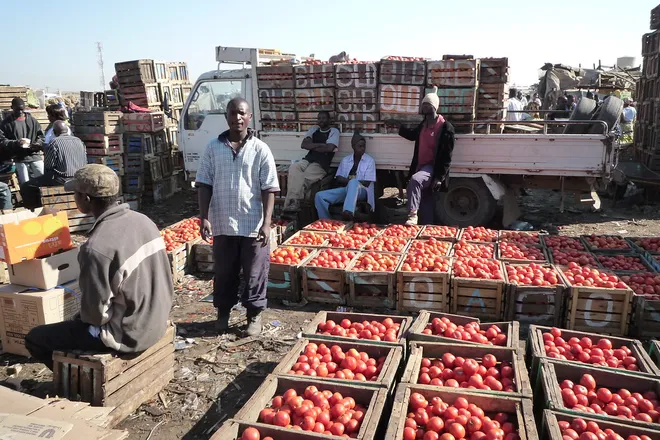
The produce changes hands twice before the city. No documentation. No tracking. Just extraction.
4-6x
middlemen between farmer and retailer, with zero price transparency at any layer
Abebe
Wholesaler, Addis Ababa Merkato
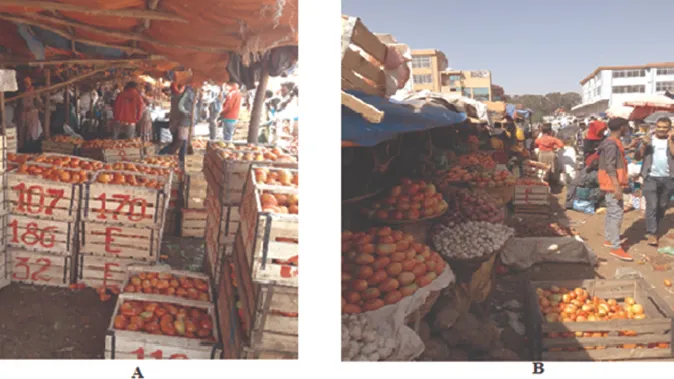
No supply forecast. No demand signal. Some days he has too much and produce rots. Some days he runs short and retailers leave empty.
0
data points available to Abebe before his daily price and procurement decisions
Sumeya
Retailer, Bole, Addis Ababa
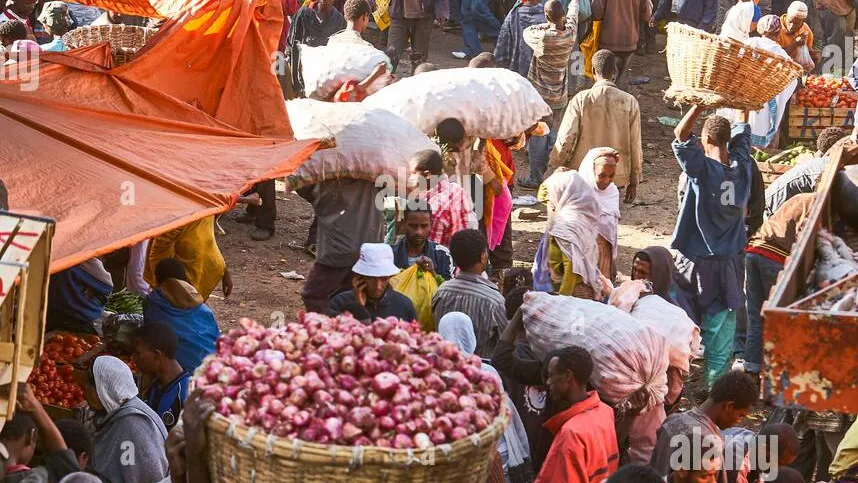
She drives 10km to wholesale in the dark not knowing the price or if the produce is even there. This is every day.
3AM
wakes up every morning
10KM
drives to market blind
0
price info before arrival
Ruit replaces every broken handoff with a single coordination layer. Here is what changes.
Asnakech
Smallholder Farmer, Tigray
Before
Sells to whoever shows up. Receives 15% of final price. No certainty.
With Ruit
Receives demand signal before harvest. Confirmed buyer. Earns more per kilogram through direct buyer connections.
+
More income for farmers through direct pricing, no middleman extraction
The Chain
Coordinated Layers
Aggregators plugged into Ruit see supply arriving from farmers and demand from retailers. Fewer layers. Every handoff tracked.
90%
of each harvest delivered intact to retailers vs. 60% through the traditional chain
Abebe
Wholesaler, Addis Ababa Merkato
Supply arriving from farmer clusters. Retailer demand visible ahead. Abebe orders exactly the right amount. Nothing rots waiting for a buyer. Nobody goes short.
40
days of supply and demand visibility. In both directions.
Sumeya
Retailer, Bole, Addis Ababa
She knows exactly what is arriving, when, and what it costs. No more 3AM drives. Her cost of goods is lower because fewer middleman layers touched the produce.
8AM
delivery arrives at her shop
0KM
no market run needed
Full
price visibility before every order
5 in 10 never reach a plate
$9.6B
lost annually to post-harvest waste
Ethiopian CSA and FAO
30-50%
of produce lost before consumers
Ethiopia Min. of Agriculture
15%
of final price reaches the farmer
Ethiopian market chain research
15M
farming households with no demand data
Ethiopian CSA
This is not a drought. This is not a bad harvest. This is what a chain without intelligence does to the people inside it.
That is what Ruit is.
FRESH PRODUCE MARKET PRICES
Ruit publishes a price only when at least 5 businesses have reported it.
How Ruit builds a price numberWHAT RUIT IS
Ruit moves coordination value between supply chain actors without ever owning goods, holding inventory, or taking margin on produce. It works on three layers.
Any warehouse, aggregator, cooperative, or retailer uses Ruit to run its own operations, recording how goods move, what arrives, and what is lost. This is where every tenant starts, and where the data begins.
When a transaction crosses from one organization to another, Ruit coordinates it, matching supply to demand and recording the movement between independent parties. This is the product: every new participant makes the platform more valuable to all the others.
Because Ruit sits across every participant at once, it sees what none of them can alone: prices, losses, supplier reliability, and demand across the whole chain. This layer is built from the very first transaction, never bolted on later.
IMPACT MEASUREMENT
Methodology aligned to IRIS+ global standards and UN SDG 1, 8, and 12.
Average transit time per shipment
Hours from dispatch to confirmed receipt
Spoilage rate per coordinated shipment
IRIS+ PI2148: weight loss in transit
Methodology and data available on request for institutional due diligence.
Press & Recognition

Prime Minister, Ethiopia
Prime Minister Abiy Ahmed of Ethiopia reviewed Ruit's supply chain platform live, citing it as a flagship example of Ethiopia's AI-first agricultural transformation strategy.

ITU / UN AI for Good
Ruit was selected as one of 5 startup finalists to compete at the ITU AI for Good Global Summit in Geneva, recognised as a high-impact AI application addressing food security at national scale.
Next Capital
Next Capital highlighted Ruit as Africa's most exciting supply chain startup, citing our approach to eliminating extractive middlemen and using AI to rebuild Ethiopia's fresh produce coordination infrastructure.
Media inquiries: [email protected]
The fresh produce supply chain in Ethiopia runs from farms and aggregators through warehouses, cold storage and transporters to wholesalers and retailers. Ruit fits in as software: businesses on the chain use it to record stock and movement and to find each other. Ruit does not buy, sell, own, store or deliver goods.
Prefer to talk? Call +251 912 433 075 or write to [email protected].
One shared record from field to plate. Pick the part of the chain you work in.
Record the stock you collect and every movement out, in the item's own unit, and find buyers for what you hold.
Manage your businessRecord stock and movement at each place, and list idle space so other businesses can request or book it.
Rent or offer capacityFind suppliers and buyers on the market, then agree quantities and orders with each one in a private room.
Find counterpartiesRegister vehicles and drivers, track trips on a live map, and offer your transport to other businesses.
Manage your fleetOne page for each fruit and vegetable: when it is in season, where it grows, how to store it and where it is traded in Ethiopia, with the source of every fact.
Fresh produce is traded at several places in Addis Ababa: Atikilt Tera, Merkato (Aratkanta), Lafto, Haile Garment, Shola, Segel, Qera, Piazza, Jemmo, Karra, Kolfe. Ruit names these places only so you can recognise them. Ruit does not run or own any of them.
Sources: Harvard University ELIAS Amharic course, 2018 (the Amharic words for wholesale and retail); Addis Fortune, 2021 (Atikilt Tera, Lafto, Qera).
Read about the Addis Ababa produce marketsPost-harvest loss is produce that is grown but does not reach a buyer in good condition, and it can happen at every step between the farm and the plate. Ruit helps each side keep one record of what was sent and received, so a shortfall is visible. The businesses on the chain reduce the loss; Ruit does not.
Read about post-harvest loss, with sourcesRuit gives every business on the fresh produce chain one shared record of stock and movement: farms and producer groups, aggregators, warehouses and cold storage, transporters, wholesalers and retailers. It also lets them list and book space, find supply and buyers, and track vehicles.
No. Ruit coordinates. It never owns goods, runs vehicles or holds money between parties.
Each side records its own quantity, so a shortfall between what was sent and what was received is visible. Write-offs are recorded by the business that holds the stock. Nothing is estimated.
Loss is reduced by acting at each step between the farm and the buyer, for example in handling, packaging, storage and transport. The post-harvest loss page lists sourced figures and measures. Ruit adds one thing: a shared record of what was sent and received, so a shortfall can be seen and discussed.
Fresh produce is traded at several places in Addis Ababa, including Atikilt Tera, Merkato (Aratkanta), Lafto, Haile Garment, Shola, Segel, Qera, Piazza, Jemmo, Karra and Kolfe. Several of these names appear in Addis Fortune, the International Food Policy Research Institute and other published sources. Ruit does not run any of these markets. To find suppliers that list produce on Ruit, open the Ruit market.
Jemla means wholesale: buying and selling in large quantities. Chiricharo means retail: selling in small quantities to the final buyer. The Amharic words are ጅምላ and ችርቻሮ.
Ruit pricing may change. We will tell you before anything changes. Questions about pricing: call +251 912 433 075 or write to [email protected].
Open the Ruit App for daily work at a warehouse, store or vehicle, or Ruit Tenant to manage several places, people and prices. Or talk to us first: Call +251 912 433 075 or write to [email protected].
Last updated:
RUIT SYSTEMS
Read by people who shape food policy, fund food systems, and build what comes next.
Published when there is something worth saying. No noise.
Get In Touch
Whether you are an investor, a development institution, a government body, or a researcher, we want to hear from you. Ruit is open to partnerships that move Ethiopia's food system forward.